
Electrostatic Oscillation Therapy (EOT) is a unique and innovative modality which has many therapeutic applications especially in oedema therapy, pain therapy (both acute and chronic) and scar therapy. It enables the therapist to deliver the therapeutic tissue manipulation without applying excessive manual pressure. This gentle nature of the therapy makes it a very versatile, therapeutic tool in treating most sensitive and painful conditions which may be present in conditions such as chronic oedema, post surgical oedema and pain, and complex regional pain syndrome. Unlike many electrotherapy modalities, the non thermal nature of electrostatic force used in the oscillation device makes it a very useful therapeutic modality when treating post surgery oedema and pain management. For example, in post hip/ knee joint replacements/ repairs where metal implants are in situ.
Therapeutic oscillation works by creating an electrostatic field between the therapist’s hand and the tissue being treated. This interaction produces a gentle, rhythmic oscillation or a “kneading” of the target tissue. This mechanical tissue oscillation promotes the interstitial fluid movement and stimulates the lymphatic circulation by directly acting on various depths of subcutaneous tissue and musculotendinous structure. It also mechanically weakens the fibrotic structures by breaking down adhesions and relaxing the excess fibres that were formed as part of an inflammatory response. It also potentially influence tissue composition of lymphoedematous body parts, reducing subcutis thickness (Gasbarrow et al., 2006) and improvement in fibrosis and sclerosis (Gasbarrow et al, 2006., Tapanes et al., 2018)
The machine is capable of producing electrostatic forces of various frequencies ranging from 5 Hz to 300 Hz. The device has many pre-set treatment protocols for specific conditions, but also allows the therapist to customize the treatment that is specific to each client and their therapeutic needs. These frequency ranges can be divided into 3, which is high frequency (80 Hz-300 Hz), medium frequency (25 Hz to 80 Hz) and low frequency (5Hz -25 Hz). Therapeutically, this frequency categorization is important as each frequency range has specific depth of tissue penetration and brings out different therapeutic effects. Let’s have a brief look into that here:
High Frequency (80 Hz-300 Hz)
Acts on Superficial Layer: Skin level and subcutaneous tissue
Therapeutic Effect: Stimulates superficial lymphatics such as Initial lymph vessels, reduces superficial oedema, pain reduction etc.
Feels like: A relaxing vibration sense
Medium Frequency (25 Hz to 80 Hz)
Acts on medium depth structures: Deeper lying portion of subcutaneous tissue, fascia, muscles, tendons and ligaments (depending upon the size of body parts being treated).
Therapeutic Effect: Improve circulation- vasodilatation, interstitial fluid exchange, promotes mobility by relaxing the tissue.
Feels like: A squeezing effect, relaxing
Low Frequency (5Hz to 25 Hz)
Deeper Penetration : Acts on deeper connective tissue, vessels and structures.
Therapeutic Effect: Aids in vasodilatation, lymph circulation, relieves nerve pain, muscle and joint stiffness.
Feels like: A deep pumping effect
The ability to choose the frequency allows the therapist to target various tissue layers through specific sequencing, which are specific to each condition and the stage of the recovery. For example, frequency range and sequencing used for chronic lymphoedema or lipoedema is different from treating an acute pain from a nerve entrapment. Usually, the therapist progresses the oscillation therapy through three phases using three different frequency ranges at a specific sequence. However, it’s not always the case, depending upon the condition and at what stage of recovery the patient is in.
Modes of Treatment:
Delivery of Treatment Through Therapist’s Hand:
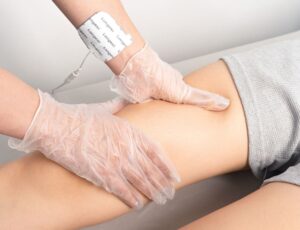
Preferred Method- It allows the therapist to precisely control the pressure and movement while allowing the therapist to combine oscillation therapy with other soft tissue therapy for an enhanced treatment outcome. For example, the therapist performing therapeutic oscillation assisted Manual Lymphatic Drainage (MLD) while treating lymphoedema. While treating through their hand, the therapist needs to wear a vinyl glove in order to create an electrostatic force.
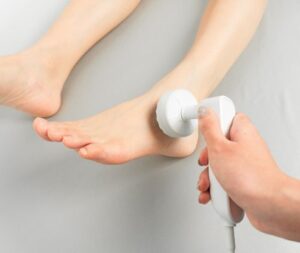
Delivery Through an Applicator Pad: This option allows the therapist to treat the tissue through an applicator pad. It also enables the patient to deliver the therapy themselves. Different sizes of pads (5.5 cm and 10 cm diameter) suitable for different body parts are available.
Indications of Oscillation Therapy :
Like any other electrotherapeutic modality, oscillation therapy is an adjunct therapeutic tool which is used in combination with other therapeutic modalities to bring about optimal therapeutic goals.
Beneficial in following conditions:
Oedema:
● Lymphoedema
● Lipoedema
● In Muscular/ Myofascial conditions
● Muscle spasm and strain
Pain relief
● Pain from musculoskeletal source
● Repetitive strain injuries
● Peripheral nerve entrapments/neuritis e.g. Sciatica pain
● Desinsitisation and Hypersensitivity to pain and pressure
● Complex regional pain syndrome
In post surgical cases:
● Scar therapy (surgical, trauma, burns)
● Post surgical Oedema and pain relief
● Post surgical oedema and pain relief (Orthopaedic, general,plastic etc)
● Post joint replacements and repairs
Wound healing:
● Wounds and ulcers, especially venous ulcers
Scar Therapy
● Post surgical scars,trauma scars, burns scars etc.
Aesthetics
● Post liposuction oedema and scar management
● Post cosmetic surgery scar and oedema management (after 360 liposuction, water assisted liposuction, tummy tuck, blepharoplasty, face lift etc.)
Athletics:
● Delayed Onset Muscle Soreness (DOMS)
● Pre event and post training muscle recovery
● Shorten recovery time.
Contraindications of Electrostatic Oscillation Therapy:
● Untreated infections
● Untreated thrombosis / Active thrombus
● Untreated malignancy
● Tuberculosis
● Cardiac Pacemakers or other implanted stimulators
● Loop recorders
● Vertebrobasilar insufficiency
● Sensitivity to electrostatic field
● Pregnancy
How we incorporate Oscillation Therapy in Perth Lymphoedema Clinic to manage Lymphoedema and Lipoedema
At our clinic we always strive to incorporate new advancements in the field of oedema management and pain relief. The therapist combines Dr.Vodder’s MLD and “special lymphatic techniques” with oscillation therapy. It is found that the effectiveness is enhanced when combining MLD with oscillation therapy, compared to doing one modality alone.
In this set up the therapist is connected with one electrode from the deep oscillatory machine, and another electrode is connected to the patient away from the treatment area, to deliver the electrostatic resonance force through the gloved hand. Delivering the oscillation through the therapist’s hand also has many other advantages, such as the real time tactile feedback from the tissue being treated and the precise control of pressure and movement which is essential for the best possible therapeutic outcome.
During initial visits, it is possible that the tissue is very sensitive to touch and pressure. The therapist utilises the high frequency settings of the oscillation therapy to target the superficial layer of soft tissue, along with lymphatic drainage to desensitise the area and reduce irritation to nerve endings. The pain gate blocking effect of soft tissue manipulation and rhythmic oscillation of tissue results in further de-sensitisation and pain reduction, setting a stage for more deeper tissue work without causing any pain or discomfort. In a typical session, the treatment is progressed through 3 different phases each targeting specific layers of tissue through different frequency rates. The first phase utilises the high frequency oscillation to target superficial subcutaneous tissue where most of the initial lymphatic vessels lie. The mechanical oscillation along with MLD changes the consistency of Interstitial fluid, also known as ground substance (In other words it affects the Thixotrophy- ability of the interstitial ground substance to change its viscosity when subjected to pressure or shearing force) to a more solution state by decreasing its viscosity.
The resultant, more soluble state helps with the improved circulation and fluid dynamics. The therapist carefully facilitates the drainage of the excess lymph by precise hand movements, keeping MLD principles. This phase is seamlessly progressed to the second medium frequency oscillation phase where deeper lymphatics and connective tissues are targeted again in line with MLD principles. This phase is then followed by a deeper penetrating low frequency oscillation where the intention is to move the larger volume lymphatic load through a deeper lymphatic system to get a “deep flush” effect. Most of the treatment time is spent in the target tissue layer, most often in the medium frequency range, depending upon the size of the area being treated.
The electrostatic oscillation assisted MLD enhances the therapeutic outcome, and the client gets most out of the session resulting in better client satisfaction. It also allows the therapist to interact with the target tissue in a way which is different from other modalities.